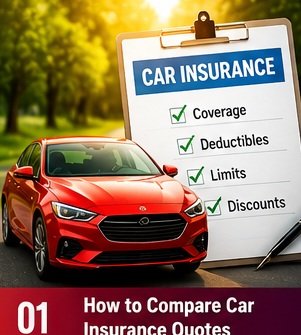
Comparing car insurance quotes can help drivers find a policy that fits both their budget and coverage needs. The lowest premium is not always the best choice, because deductibles, liability limits, exclusions, roadside assistance, and repair coverage can change the real value of a policy.
Start by collecting the same information for every quote. Insurers commonly ask about the vehicle, driving history, location, annual mileage, and intended use. Keeping these details consistent makes the comparison more useful.
Pay close attention to liability limits. Liability coverage can protect you financially when you are responsible for injuries or property damage, subject to the policy terms. A lower-priced quote may also provide lower limits, so compare coverage rather than price alone.
Next, compare comprehensive and collision deductibles. A higher deductible can reduce the premium, but it means paying more out of pocket after a covered claim. Choose a deductible that you could realistically afford.
Drivers should also check optional benefits such as roadside assistance, rental reimbursement, uninsured or underinsured motorist coverage, and glass protection where available. These extras can be useful depending on the vehicle and driving habits.
Finally, review discounts and renewal terms. Multi-policy, safe-driving, low-mileage, vehicle-safety, and payment-related discounts may be available depending on the insurer and location. Insurance pricing varies by person, so getting several current quotes is usually the most practical way to compare options.
This article is general information, not financial or insurance advice. Coverage rules and availability vary by insurer and location.