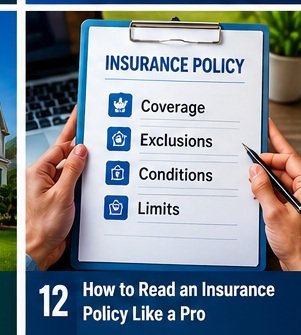
Insurance policies contain important information that is easy to overlook when shoppers focus mainly on price.
Start with the declarations or summary page. It typically identifies the insured, policy period, limits, deductibles, and selected coverages.
Then review definitions. A policy may use specific meanings for words that have a narrower meaning than their everyday use.
Next, examine covered causes of loss and exclusions. Exclusions can be just as important as the coverage section because they explain circumstances in which the insurer may not pay.
Check conditions and duties after a loss. Policies may require prompt notice, documentation, cooperation with an investigation, or other actions.
Review limits and sublimits. Some categories of property or certain types of claims may have lower maximum payments.
Finally, look at endorsements and optional additions. These can change or expand coverage and may also affect the premium.
If a clause is unclear, ask the insurer or a qualified professional to explain it before purchasing. Keep a copy of the final policy and endorsements.
Comparing policies on coverage, exclusions, limits, deductibles, and service—not only premium—can lead to a more informed decision.